 Dumpling Dash
Why are dumplings steamed in bamboo baskets?
The round basket on every dim sum table is more than a pretty dish. Here is how it works, why cooks love it and how to try one at home.
In this guide
Dumplings are steamed in bamboo baskets because bamboo handles steam gently. The woven lid lets a little steam escape and soaks up some of the water that would otherwise drip back onto the food, so wrappers stay soft rather than soggy. The baskets stack, so several dishes cook over one pot of water, and they go straight to the table as serving dishes. It is also simply a long tradition in Chinese cooking, especially at dim sum.
At a dim sum table, the food often arrives in the same round basket it was cooked in. Lift the lid and a puff of steam rolls out over a few soft, shiny dumplings. It looks lovely, and there are practical reasons too.
This guide explains why bamboo is the classic choice for steaming dumplings, how the basket actually works, how it compares with a metal steamer, and how a family can use one at home safely. It also shows the little bamboo steamer that sits at the heart of Dumpling Dash, our cute crowd runner game.
How a bamboo steamer works
A bamboo steamer is a short, round basket with a slatted or woven bottom and a tightly woven lid. It is not a pot. It sits above boiling water, and the food never touches the water at all.
Here is what happens when it cooks:
- Water boils in a wok or pan underneath.
- Hot steam rises through the gaps in the bottom of the basket.
- The steam wraps around the dumplings and cooks them from every side at once.
- The lid holds most of the steam inside, but lets a little out through the weave.
Because steam is gentle, delicate wrappers like the thin skins on shrimp dumplings or the soft dough of a bun cook without being knocked about, as they might be in rolling, boiling water.
Why bamboo instead of metal?
Metal steamers work too, and plenty of home cooks use them. Cooks who prefer bamboo usually give a few reasons.
The lid handles drips. Under a metal lid, steam turns back into water and drips onto the food. A woven bamboo lid lets some steam escape and soaks up part of that moisture, so fewer drops land on the dumplings. That is why bamboo is often recommended for fluffy buns, which can turn wet and sticky on top.
The baskets stack. Bamboo steamers are made in tiers. You can put two or three baskets on top of each other over one pot of water and cook several dishes at once.
They go to the table. A bamboo basket looks good enough to serve in, so the food goes from the stove to the table without being moved. It also stays warm in the basket for a while.
A light, woody smell. Many cooks say bamboo adds a faint, pleasant aroma. It is subtle, and some people never notice it.
Tradition. Steaming in bamboo has a very long history in Chinese cooking. In Cantonese tea houses, where people go for yum cha, buns, har gow and siu mai have long been steamed and served this way. That is why these baskets are often simply called dim sum steamers. Our beginner's guide to dim sum explains how a whole meal of these baskets works.
The trade-offs are real too. Bamboo needs a little more care than metal, it can pick up smells, and it wears out sooner. For many families it is still worth it.
Which dumplings are steamed?
Not every dumpling goes in a steamer. Some are boiled, some pan-fried, some do a bit of both. Steaming suits dumplings with soft or thin wrappers that would tear or turn mushy in water.
Classic examples include soup dumplings, shrimp dumplings, open-topped siu mai and fluffy filled buns. Xiaolongbao even take their name from the basket: the name is often translated as "little basket buns". You can read more in our guide to xiaolongbao. Pan-fried gyoza usually take a different route, which our gyoza, bao and xiaolongbao guide explains in three quick questions.
How to use a bamboo steamer at home
Steam is very hot, so children should always do this together with an adult, and the adult handles the stove and the lid.
- Pick the right pan. Use a wok or a pan a little wider than the steamer, so the basket rests on the sides above the water.
- Add water. Pour in a few centimetres of water. It should sit below the bottom of the basket, never touching the food.
- Line the basket. Put down baking paper with a few holes poked in it, or a few cabbage or lettuce leaves. This stops dumplings from sticking to the bamboo.
- Leave space. Place the dumplings with a small gap between each one. They puff up a little as they cook.
- Bring the water to a boil. Then set the basket on top and put the lid on.
- Steam until cooked. Follow the time on your recipe or the packet. Frozen dumplings usually need longer than fresh ones.
- Check the water. For longer steaming, an adult tops up the pan with hot water so it never boils dry.
- Open the lid away from your face. An adult lifts the lid so the steam rolls away from them, not towards anyone's hands or face.
- Let them cool. Steamed dumplings are very hot inside, especially soup dumplings. Move them to a plate and wait a minute before eating.
How to look after a bamboo steamer
A little care keeps a basket going for a long time:
- Rinse, do not soak. Wash it with warm water and a soft brush after use. Avoid harsh soap, which bamboo can soak up.
- Dry it fully. Let it air-dry completely before you stack it away, so it does not go mouldy.
- Store it somewhere airy. A shelf is better than a closed plastic box.
- Keep it lined. Using paper or leaves every time keeps the bamboo cleaner and stops smells from building up.
The steamer in Dumpling Dash
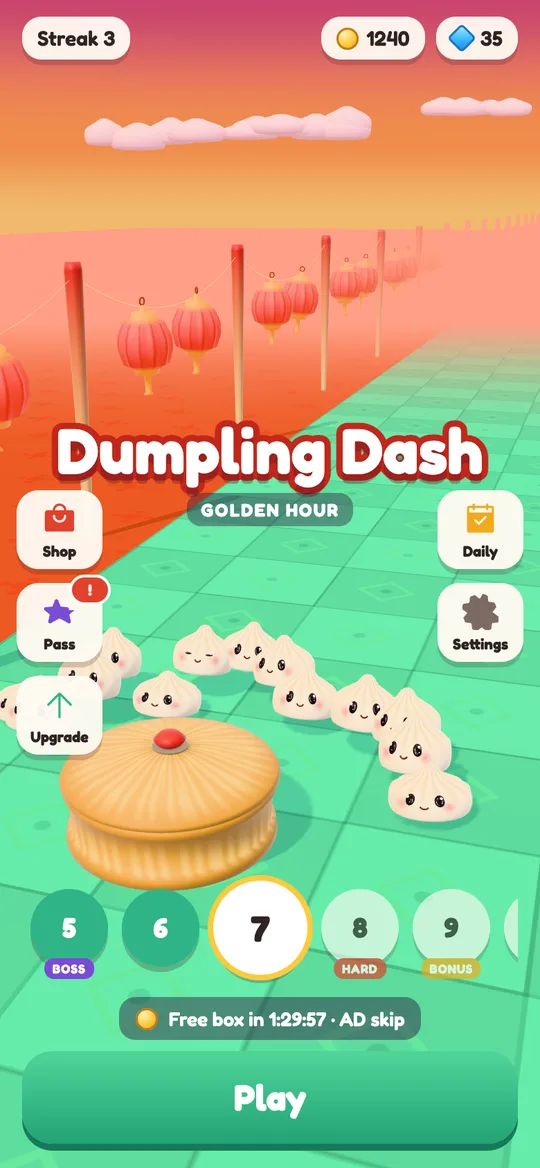
When we designed Dumpling Dash, the bamboo steamer was the first thing we drew. In the game it sits at the bottom of the street, round and golden with a little red knob on its lid. Your whole crowd of dumplings comes out of it.


You hold anywhere on the screen to steam dumplings out of the basket, with soft white puffs rising as they pop out, and drag to steer them through the blue gates. When eight dumplings huddle close they squish into one big MEGA BAO. At the end of each level your crowd has to knock down a chopstick fortress before the chopstick soldiers march all the way back down to your steamer. If this is your first time, our guide to how to play Dumpling Dash walks through a full level.
The streets borrow from the dim sum world too, with red paper lanterns strung on lines above the road and names such as Dusk Market, Golden Hour and Lantern Night.
A steamer game for the kitchen
Next time you steam dumplings at home, turn the wait into a small game. Before the lid comes off, everyone guesses which dumpling will puff up the most. Then the adult lifts the lid away from the table and you find out together.
FAQ
Why are dumplings steamed in bamboo and not boiled?
Many dumplings have thin or soft wrappers that would tear or turn mushy in boiling water. Steam cooks them gently from all sides, and a bamboo lid stops most drips from falling back onto the food.
Do you need a bamboo steamer to steam dumplings?
No. A metal steamer basket, or a plate on a rack inside a covered pan, also works. Bamboo is the traditional choice and many cooks like how its lid handles drips, but it is not the only way.
Should you line a bamboo steamer?
Yes, it helps. Baking paper with small holes, or a few cabbage or lettuce leaves, stops dumplings from sticking and keeps the bamboo cleaner for longer.
Why do dim sum restaurants serve food in the steamer?
The basket is pretty enough to serve in, it keeps the food warm, and moving delicate dumplings onto a plate can tear them. So the basket goes straight from the stove to the table.
Can children use a bamboo steamer?
Children can help line the basket and place the dumplings, but steam is very hot. An adult should handle the stove, the boiling water and lifting the lid, opening it away from everyone.