 Dumpling Dash
Gyoza vs bao vs xiaolongbao: how to tell them apart
One is crispy, one is fluffy and one hides soup. A kid-friendly guide to three favourite dumplings, with a spotting game at the end.
In this guide
Gyoza are thin-skinned, half-moon dumplings from Japan, usually pan-fried so the bottom turns crisp. Bao are soft, fluffy buns made from a yeasted dough that rises, then steamed. Xiaolongbao are small steamed dumplings from Shanghai with a thin, pleated skin and hot soup inside. The quickest test: crispy bottom means gyoza, fluffy bread means bao, soup inside means xiaolongbao.
Dumplings come in so many shapes that even grown-ups mix them up. Three of the most famous are gyoza, bao and xiaolongbao, and all three are characters in Dumpling Dash, our cute crowd runner game. That makes them a fun place to start.
This guide is written for curious kids and the adults who answer their questions. We look at the shape, the dough and the cooking of each one, then give you three easy questions that tell them apart and a little spotting game to play at a restaurant or at home.
The three dumplings at a glance
Here is the short version before we go deeper:
- Gyoza: a half-moon shape with a pleated edge along one side. Thin skin. Usually fried on the bottom, then steamed in the same pan. Crisp underneath, soft on top.
- Bao: a round, puffy bun. Thick, soft dough that has risen like bread. Steamed. Fluffy all the way through.
- Xiaolongbao: a small round dumpling with lots of tiny pleats twisted into a knot on top. Very thin skin. Steamed in a bamboo basket. Hot soup inside.
So the gyoza vs bao vs xiaolongbao question really comes down to two things: what the dough is like and how it is cooked. The filling can be similar in all three.
Gyoza: the crispy half-moon
Gyoza are Japanese dumplings. They grew out of Chinese jiaozi and became a popular everyday food in Japan during the 20th century. You will often see them at ramen shops, served in a row with their golden bottoms facing up.
What makes a gyoza a gyoza:
- The shape. A round wrapper is folded in half over the filling, and one edge is pinched into small pleats. The result looks a bit like a little purse or a crescent moon.
- The skin. The wrapper is thin, so it cooks quickly and gets crisp where it touches the hot pan.
- The cooking. The usual way is fry, steam, fry: the dumplings sizzle in a little oil, a splash of water goes in and the lid goes on so they steam, then the lid comes off and the bottoms crisp up again.
- The filling. Often minced pork with cabbage, garlic and ginger. Vegetable gyoza are common too.
They are usually dipped in a mix of soy sauce and vinegar. In English you may also hear a very similar dumpling called a potsticker, because the bottom sticks to the pan as it browns.
Bao: the fluffy bun
Bao (sometimes written bao zi or baozi) are Chinese buns. The big difference here is the dough. Bao dough has yeast in it, just like bread, so it is left to rise until it is soft and puffy. Then the buns are steamed, which keeps them white and pillowy instead of brown and crusty like an oven loaf.
What makes a bao a bao:
- The shape. Round and plump, often with a swirl of pleats on top, or folded open like a little taco in the case of gua bao.
- The dough. Thick, soft and springy. If you squeeze one gently, it bounces back.
- The cooking. Steamed, usually in a bamboo basket.
- The filling. A favourite is char siu bao, filled with sweet roast pork. There are also sweet ones, such as bao filled with red bean paste or a custard filling.
A bao is the most filling of the three, because there is a lot of bread around the middle. One or two can be a whole snack.
Xiaolongbao: the soup surprise
Xiaolongbao are the small soup dumplings best known from Shanghai. The name means roughly "little basket bun", because they are steamed in, and served in, small bamboo baskets.
What makes a xiaolongbao a xiaolongbao:
- The shape. Small and round, with lots of fine pleats twisted into a knot on top.
- The skin. Much thinner than a bao, so you can sometimes see the filling through it.
- The cooking. Steamed in a bamboo basket.
- The filling. Usually pork mixed with cubes of set broth jelly that melts into hot soup in the steamer.
Because the soup is very hot, children should eat them slowly with a grown-up nearby. We wrote a whole guide on what xiaolongbao is and how to eat one safely, including the clever jelly trick that gets the soup inside.
Three questions that tell them apart
Next time a plate of dumplings arrives and someone asks "which one is this?", work through these questions in order:
- Is the bottom golden and crispy? If yes, and the dumpling is a half-moon shape, it is almost certainly a gyoza. If not, go to question 2.
- Is the dough thick, soft and bread-like? Press gently with a chopstick. If it is springy and fluffy like a roll, it is a bao. If the skin is thin and silky, go to question 3.
- Is there soup inside? Put it on a spoon and nibble a tiny hole. If hot soup comes out, you have a xiaolongbao.
If a dumpling fails all three tests, you have found a new kind to learn about, such as shumai or wontons.
Spot the dumplings in Dumpling Dash
All three of our dumplings show up in Dumpling Dash, so the game doubles as a little spotting game.
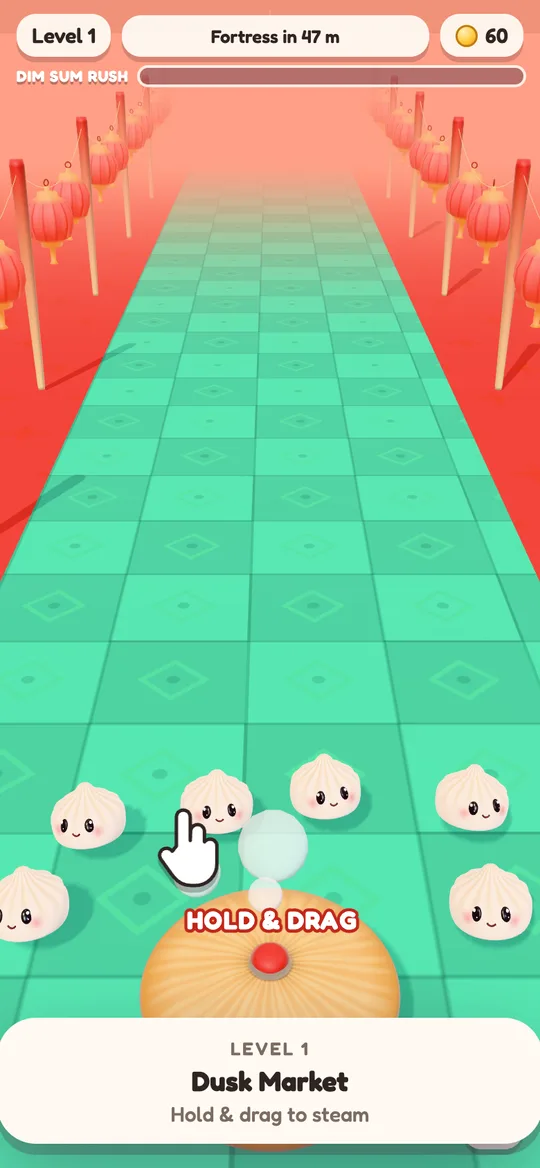
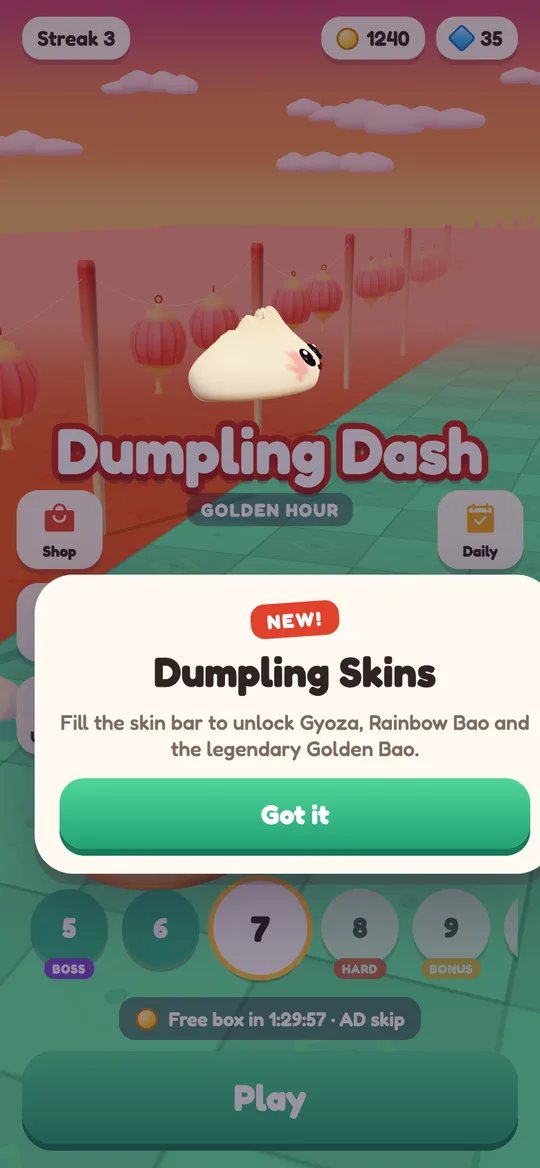
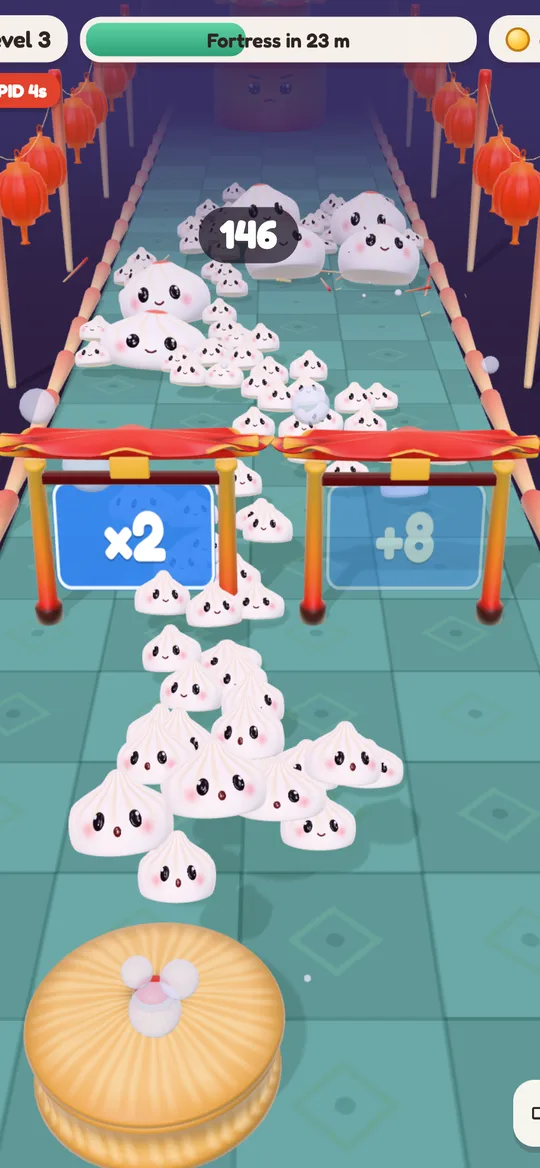
Every player starts with the Xiaolongbao skin: a whole crowd of round, pleated dumplings that you steam out of a bamboo steamer and steer through gates. As you win levels, a skin bar fills up. When it is full, the next skin unlocks in this order:
- Gyoza: the half-moon dumpling, with the pleated edge along the top.
- Rainbow Bao: the classic round shape, but shimmering with soft rainbow colours.
- Golden Bao: the legendary one, with a shiny gold finish.
Gyoza and the bao skins can also be earned on the Dumpling Pass, and everything in the game is earned by playing. You can switch back to any skin you have unlocked from the Skins tab in the Shop.
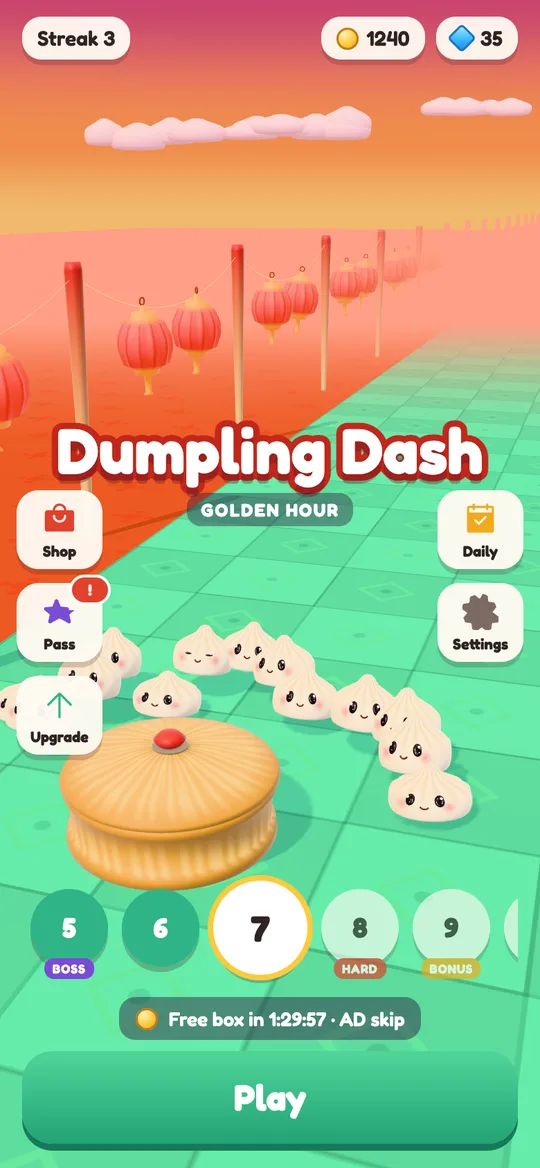
Here is a game to try: ask a child to describe each skin out loud using what they learned. "The gyoza is a half-moon and would be crispy on the bottom." "The bao would be fluffy." It turns a few minutes of play into a little food lesson. If you have not played yet, our beginner's guide to Dumpling Dash walks through a full level step by step.
Try it at home with an adult
You do not need to cook to learn the difference. Try one of these:
- Shop hunt. In the freezer aisle of a supermarket, see how many of the three you can find, and check the cooking instructions on the bag. Pan-fry means gyoza-style, steam means bao or soup dumplings.
- Play dough dumplings. Use modelling clay to fold a half-moon gyoza, a round bao and a tiny pleated xiaolongbao. The pleats are the hardest part, just like in real kitchens.
- Draw a chart. Make three columns, one per dumpling, and fill in shape, dough, cooking and filling.
And if your crowd of dumplings in the game ever squishes eight together, that big round bun is a MEGA BAO. Our MEGA BAO guide explains how to make more of them.
FAQ
What is the main difference between gyoza and bao?
Gyoza have a thin wrapper folded into a half-moon and are usually pan-fried until the bottom is crisp. Bao are made from a thick, yeasted dough that rises like bread, and they are steamed until soft and fluffy.
Is xiaolongbao a bao or a dumpling?
Both answers are heard. The name ends in "bao", but its skin is thin like a dumpling wrapper, not fluffy like a bun. Most people simply call it a soup dumpling.
Which one has soup inside?
Only xiaolongbao. The soup starts as a set broth jelly mixed into the filling, and it melts back into hot soup while the dumplings steam.
Are gyoza Japanese or Chinese?
Gyoza are Japanese. They developed from Chinese jiaozi, which is why the two look so alike, but gyoza often have thinner skins and are usually pan-fried.
Which dumplings are in Dumpling Dash?
Every player starts with Xiaolongbao. Winning levels fills a skin bar that unlocks Gyoza, then Rainbow Bao, then the legendary Golden Bao. All of them are earned by playing.