 Dumpling Dash
What is dim sum? A beginner's guide to the little dishes
Small baskets, lots of tea and a table full of sharing. Here is how a dim sum meal works and what to order on your first visit.
In this guide
Dim sum is a Cantonese style of meal made of many small dishes, such as steamed dumplings, soft buns and little tarts, shared by everyone at the table and eaten with tea. It comes from southern China, around Guangzhou and Hong Kong, and is usually eaten in the morning or around lunchtime. Going out for dim sum is often called yum cha, which means "drink tea".
Imagine a round table, a pot of tea in the middle and a stack of small bamboo baskets arriving one after another. Each basket holds three or four bites of something different. Everyone reaches in, tries a little, and the next basket comes. That is dim sum, and it is one of the friendliest ways to eat in the world.
If you have never been, the menu can look like a puzzle. This guide explains what the words mean, how a meal works from the first cup of tea to the last tart, which dishes are easy wins for beginners and children, and a few simple manners that make the table happy. It also shows how this way of eating inspired the street, the steamer and the cute crowd in Dumpling Dash.
What is dim sum, in plain words?
Dim sum is not one dish. It is a whole meal built from many small ones. Most come in portions of three or four pieces, so a group can order lots of different things and share them all.
The dishes are cooked in a few main ways:
- Steamed, in bamboo baskets. Dumplings and soft buns are the classic example.
- Fried, like spring rolls and crispy taro puffs.
- Baked, like flaky egg tarts and glazed pastry buns.
The name comes from Cantonese, 點心, and is often translated as "touch the heart". A nice way to read it is "a little something to make you happy", rather than a full, heavy meal.
Dim sum and yum cha: what is the difference?
You will hear both words, and they go together. Dim sum is the food. Yum cha means "drink tea", and it is the name for the whole outing: sitting down with family or friends, pouring tea and sharing small dishes for an hour or two.
Tea is not an extra here. It comes first, it stays on the table the whole time, and many people say the meal is really about the tea and the company, with the food along for the ride. Popular choices include jasmine, oolong and pu-erh. Children can ask for water or a mild tea that has cooled down.
Yum cha is most loved in southern China, especially in Guangzhou and Hong Kong, and Cantonese families carried it to cities all over the world. In many places it is a weekend tradition, often in the morning or around lunchtime.
How a dim sum meal works, step by step
Restaurants differ, but most visits follow the same shape:
- Sit down and pick a tea. The server brings a pot for the table. Whoever is nearest pours for the others before themselves.
- Order a little at a time. Some restaurants push trolleys between the tables and you point at what you want. Many now give you a paper menu where you tick dishes with a pencil.
- Start with a few baskets. Two or three dishes for the table is plenty to begin. You can always ask for more.
- Share everything. Each person takes one piece from a basket, so everyone gets a taste.
- Order the next round. Once you know what the table likes, add more of the favourites and try one new thing.
- Finish with something sweet. Egg tarts or mango pudding are common ways to end.
- Ask for the bill. With trolleys, staff often mark a card on your table each time a dish arrives, so the bill adds up as you go.
Five dim sum dishes for your first visit
If the long menu feels like too much, these five are safe, well-loved starting points. They also give a nice mix of steamed, baked and sweet.
- Har gow. Shrimp dumplings with a thin, almost see-through wrapper, pleated along the top. A good test of a dim sum kitchen.
- Siu mai. Open-topped dumplings filled with pork and shrimp, often with a small orange dot on top. Easy to pick up with chopsticks.
- Char siu bao. Soft, fluffy white buns filled with sweet barbecue pork. Children often love these first.
- Xiaolongbao. Little steamed dumplings with hot soup inside. They are originally from Shanghai rather than Canton, but many dim sum places serve them. Our guide to xiaolongbao shows how to eat one safely, because the soup is very hot.
- Egg tarts. A crisp pastry case with a smooth, sweet egg custard. A perfect last bite.
If you want to tell the dumplings and buns apart at a glance, our kid-friendly guide to gyoza, bao and xiaolongbao has three quick questions that do the job.
Dim sum manners that make the table happy
You do not need to be an expert. A few small habits go a long way:
- Pour for others first. When you fill a cup, fill your neighbours' cups before your own.
- Say thank you with your fingers. In Cantonese custom, some people tap two fingers on the table when someone pours their tea. It is a quiet "thank you" that does not interrupt the chat.
- Take one piece at a time. Dishes are shared, so take one, then let the basket go round.
- Rest chopsticks across your bowl or on the rest. Do not stand them upright in rice.
- Watch for heat. Steamed food comes out very hot. Let children's pieces cool on a plate or spoon first.
Dim sum restaurants are often busy and lively, so families with small children usually fit right in.
How dim sum inspired Dumpling Dash
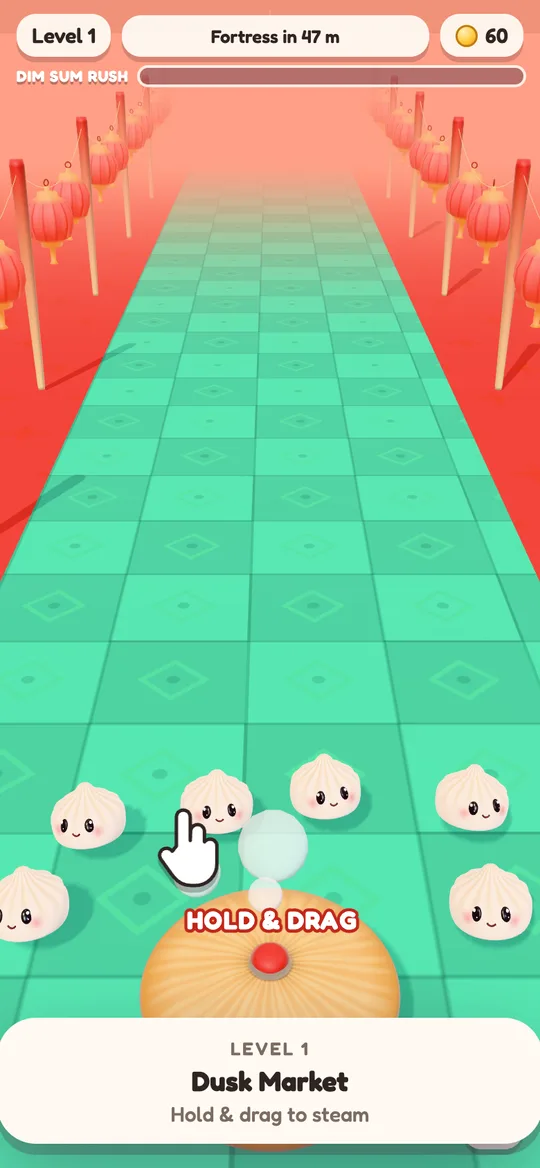
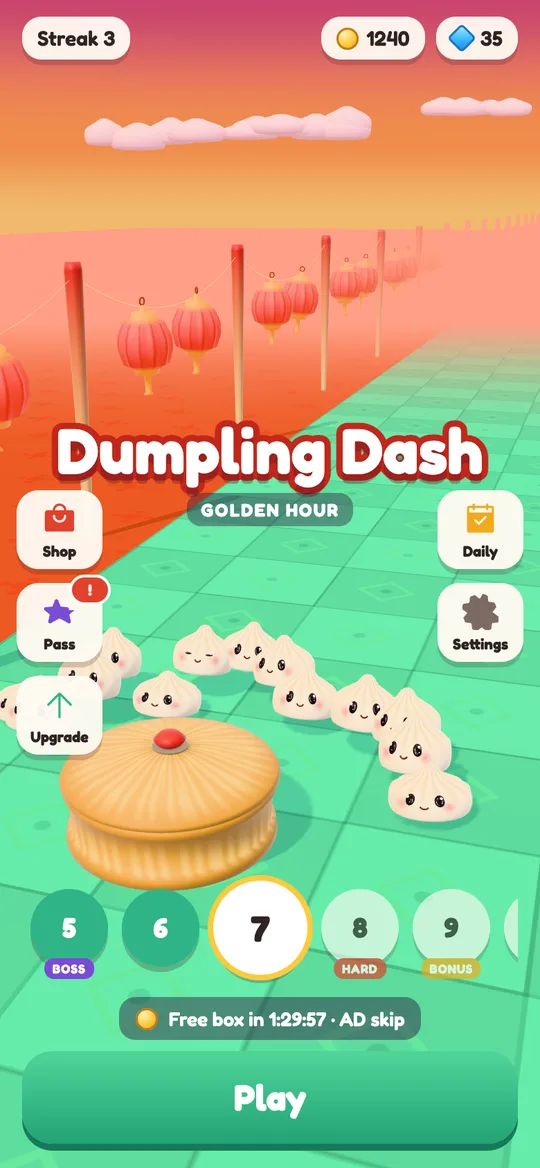
When we designed Dumpling Dash, a cute crowd runner game, the dim sum table was our mood board. Your crowd is made of pleated dumplings that pop out of a round bamboo steamer at the bottom of the screen, just like a fresh basket landing on the table. You hold to steam, drag to steer, and when eight dumplings huddle close they squish into one big MEGA BAO.
The streets borrow from the same world too. Red paper lanterns hang on lines above the road, and the street names change as you play: Dusk Market, Golden Hour, Lantern Night, Mint Morning and Festival Night.
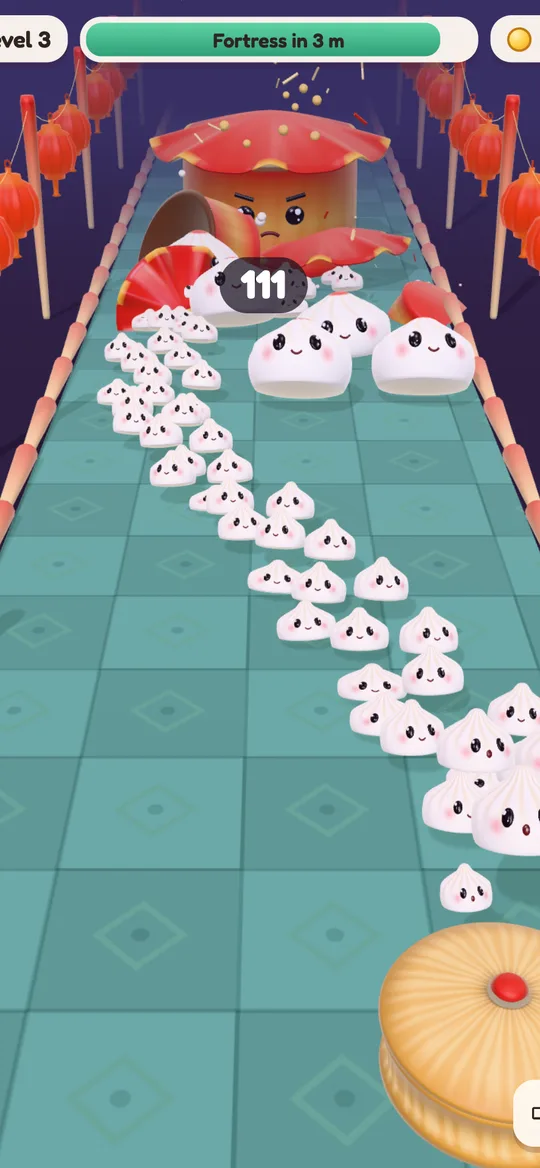
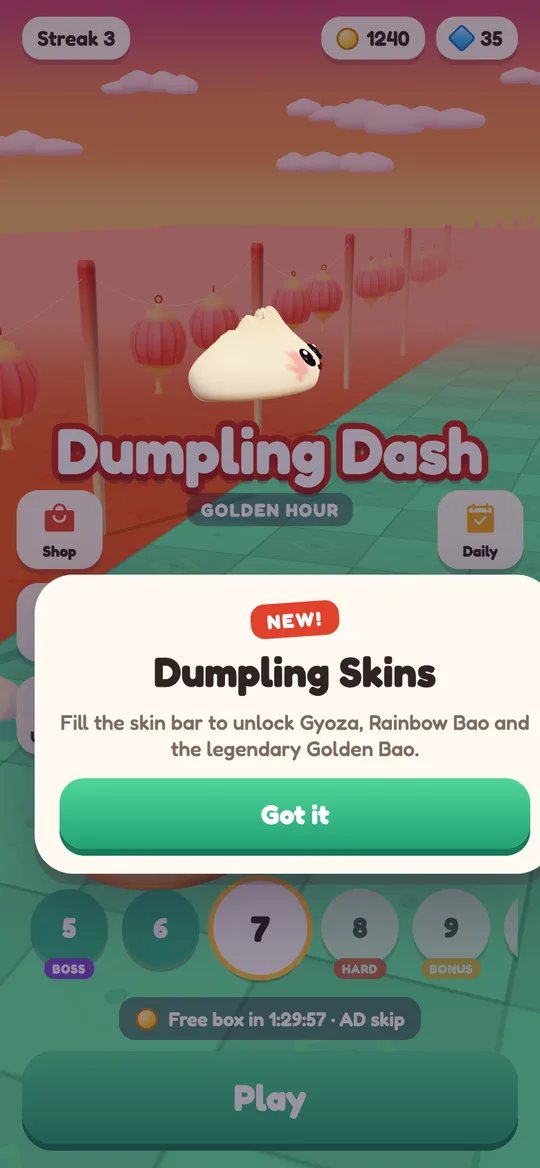
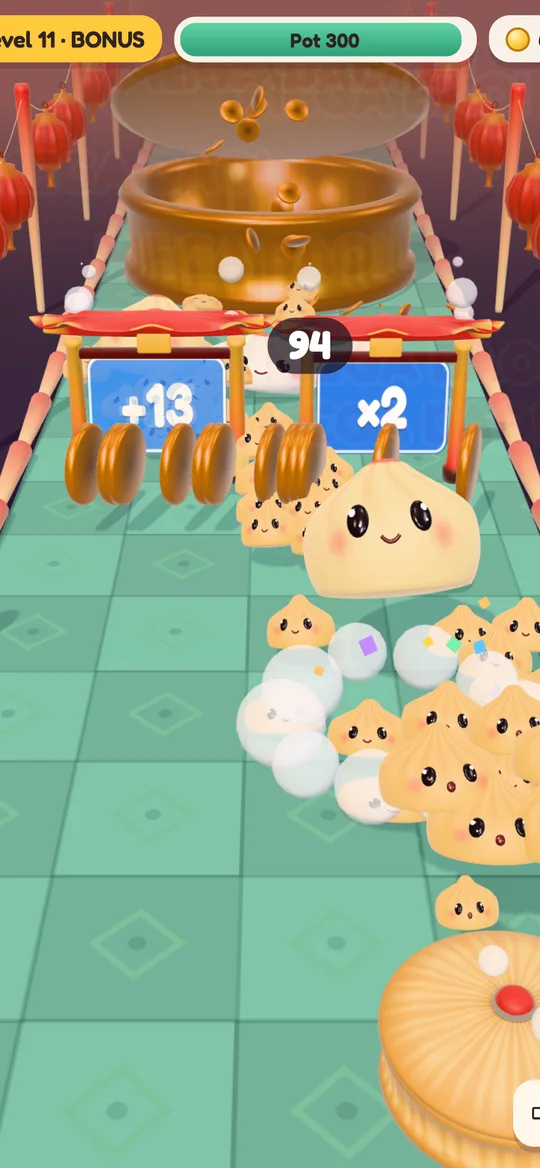
After a hard or boss level, the next one is either an easier level or a dumpling rain bonus, where your crowd runs through gates toward a giant copper pot. As you win, a skin bar fills and unlocks new dumplings after the starter xiaolongbao: Gyoza, Rainbow Bao and the legendary Golden Bao. Everything is earned by playing, with no purchases. New to the game? Our beginner's guide to Dumpling Dash walks through a full level.
A dim sum game to play at the table
Turn your first visit into a little game. Before the food comes, each person guesses which basket will arrive first. When a dish lands, everyone says whether it is steamed, fried or baked, and whether it is a dumpling, a bun or something else. Keep score on a napkin. By dessert, even the youngest person at the table will be naming har gow and siu mai like an old hand.
FAQ
What does dim sum mean?
The Cantonese name 點心 is often translated as "touch the heart". It describes small, light dishes meant to be shared and enjoyed with tea, rather than one big plate each.
Is dim sum just dumplings?
No. Dumplings are a big part of it, but dim sum also includes soft steamed buns, rice noodle rolls, fried snacks like spring rolls, baked pastries and sweet dishes such as egg tarts and mango pudding.
What is the difference between dim sum and yum cha?
Dim sum is the food itself. Yum cha means "drink tea" and is the name for the whole meal out, where people sit together, pour tea and share many small dishes.
When do people eat dim sum?
Traditionally in the morning or around lunchtime, and it is a popular weekend outing for families. Some restaurants stop serving dim sum in the afternoon, so going earlier is a good idea.
What dim sum is good for kids?
Many children like char siu bao for its soft, fluffy bun, siu mai because it is easy to pick up, and egg tarts as a sweet finish. Let steamed dishes cool first, especially soup dumplings.