 Dumpling Dash
Why do crowd runner games feel so satisfying?
It is not luck or magic. A handful of small design choices work together, and once you know them you can spot them in every run.
In this guide
- You can see your progress
- Every choice is a quick, fair sum
- Sound and touch confirm every result
- Merges turn many small wins into one big one
- A clear finish line makes each run feel complete
- Losing is quick, clear and fair
- Calm on purpose: why less can feel better
- Try it: spot the design in five minutes
- FAQ
Crowd runners feel satisfying because your progress is something you can see: a crowd that grows or shrinks right in front of you. Every choice is a tiny sum you can solve in a second, and every result arrives at once with a sound, a bounce and a new number. Merges turn many small wins into one big one, and the level ends with a clear finish, so each run feels complete in about a minute.
You meant to play one level. Ten minutes later you are still steering a little army through glowing gates and watching the number above it climb. What makes that loop so pleasant?
The answer is not one trick but a stack of small design choices. This guide explains why crowd runners feel satisfying, one piece at a time, using Dumpling Dash, our own crowd runner, as the example. We built it, so we can tell you exactly what happens on screen and why. If the genre is new to you, start with what a crowd runner game is.
You can see your progress
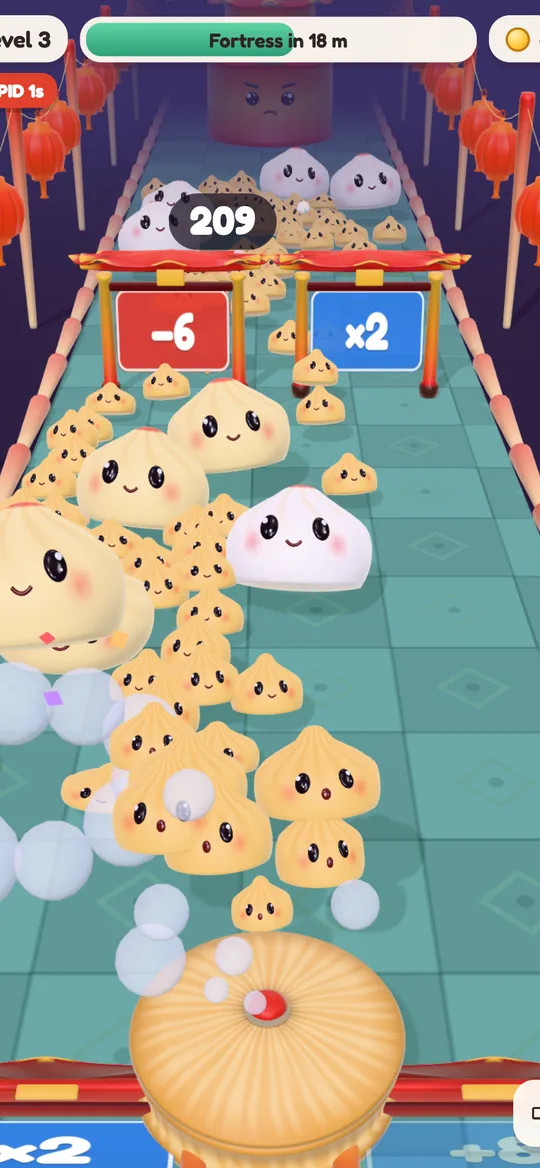
In many games, progress is a score in the corner. In a crowd runner, progress is the main thing on screen. When you pick a good gate, the crowd in front of you gets bigger. When you hit a red gate, it gets smaller. You do not have to read anything to know how you are doing.
Dumpling Dash backs this up with one clear count. A single number floats above the middle of your crowd and changes as dumplings join or drop out. A MEGA BAO counts as all the dumplings that went into it, so merging never makes your number fall.
The crowd also behaves like a real group. Each dumpling pops out of the bamboo steamer, lands with a little wobble and runs straight on. The shape of the crowd is the path your steamer took. That link between your thumb and the crowd is a big part of why the game feels like yours.
Every choice is a quick, fair sum
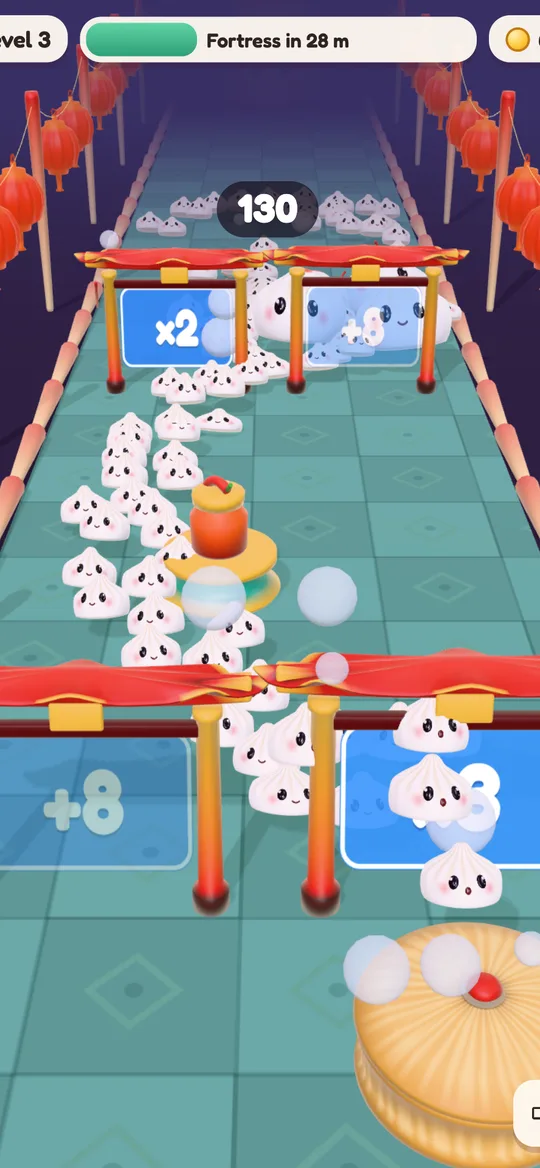
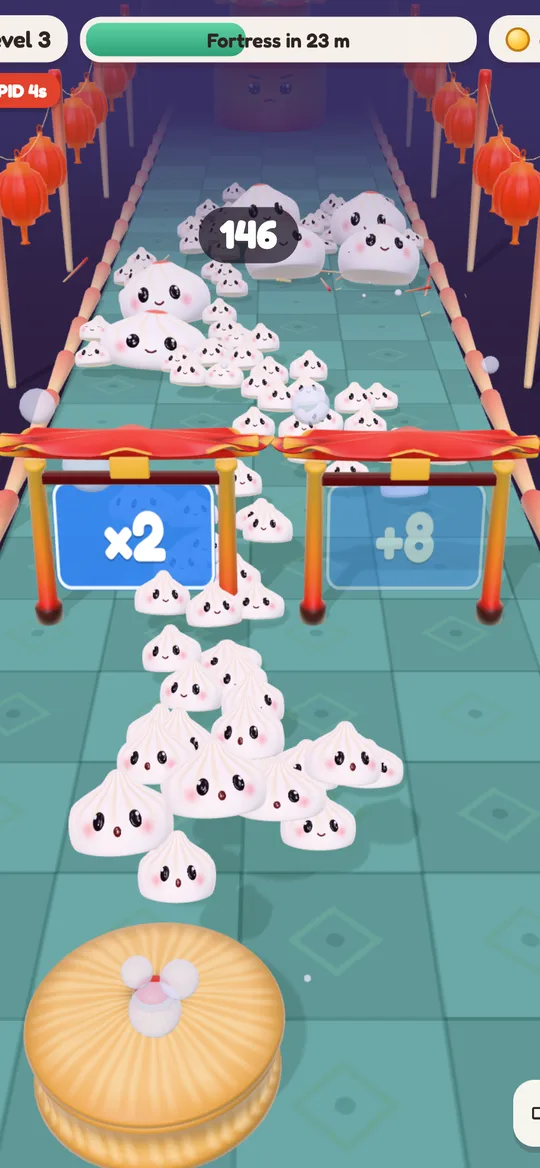
Gates are the heart of the genre. Two numbers, a second to decide, and a result you can check straight away. That is a nice kind of thinking: hard enough to matter, easy enough to finish before the gate arrives.
What keeps it satisfying is that the choice is fair. In Dumpling Dash blue gates always help (×2, ×3, +N) and red gates always hurt (−N, ½). The colours never lie to you. When you pick wrong, you can see why, and next time you pick right.
There is real maths underneath, and it rewards players who notice it. A ×2 gate beats a +15 gate once more than 15 dumplings go through it, for example. Our gate maths guide walks through the break-even rule if you like that side of things.
Sound and touch confirm every result
A choice only feels good if the game answers it. Crowd runners answer constantly, and Dumpling Dash puts a lot of care into those answers.
- Every dumpling has a voice. Each one leaves the steamer with a soft plop, and each one passing a gate makes a light wooden click. A thick stream through a ×3 gate sounds like a busy kitchen.
- Multiply gates puff. Fresh dumplings pop out of the gate small and spring up to full size, with a little cloud of steam.
- Hits sound like food, not weapons. Dumplings hitting chopstick soldiers make juicy squish sounds, and snapping chopsticks crunch like a fresh carrot. Every sound in the game comes from a real recording, not a synthesizer.
- Big moments buzz. On phones that allow it, merges, fortress cracks and the final smash add a tiny vibration.
Together they mean nothing you do goes unanswered. That is a large part of what people call "game feel".
Merges turn many small wins into one big one
Eight dumplings close together squish into one MEGA BAO, a big, tough bun that flattens chopsticks. It is the most satisfying moment in a normal run, and that is on purpose.
The merge has its own little show: the eight dumplings are pulled into one spot, a deep gulp sound plays, a ring of steam and coloured sparks bursts out, and the camera gives a small kick. Then the new bao drops in with a bounce. A crowd full of small successes suddenly has something big and solid in it.
It also rewards good play without saying so. You get more MEGA BAOs when your crowd is tight, so steering calmly pays off in a way you can see. Our crowd-tight guide and MEGA BAO guide show how to make more of them.
A clear finish line makes each run feel complete
Endless games can stop at any moment. A crowd runner always heads somewhere. In Dumpling Dash a bar at the top says how far away the fortress is, so you always know how long is left.
At the end the whole run pays off at once. Your crowd marches into the chopstick fortress, the fortress cracks stage by stage, and when it falls the game freezes for a split second, the screen flashes, time slows down and the fortress shatters into pieces and coins. Then the win card shows what you earned.
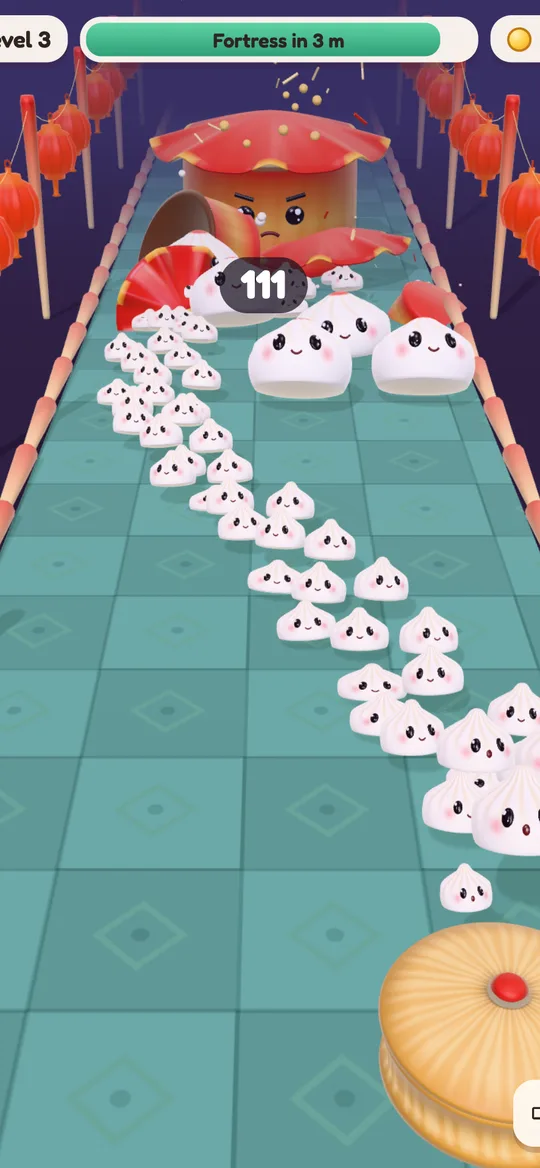
Because a level lasts about a minute, you get that ending often. A clear goal, a short wait and a big finish is a very satisfying rhythm.
Losing is quick, clear and fair
Satisfying games do not only feel good when you win. They also make losing easy to accept. In Dumpling Dash a run ends when chopstick soldiers, a boss or an obstacle reach your steamer, and the result card tells you how much of the fortress was left. You see exactly how close you were.
Then you can try again in a moment. Because the cause is clear, you usually know what to change: a different gate, a calmer path, an upgrade. That makes the next try feel like a fix, not a repeat.
Calm on purpose: why less can feel better
More effects do not always mean more fun. A screen full of shaking, flashing words can make it hard to see your crowd. Dumpling Dash keeps play calm on purpose: the camera does not swing around, gates use plain blue and red, only a few important words appear (like MEGA BAO! or FORTRESS DOWN!), and the strongest effects are saved for merges and the final smash.
That contrast matters. When small moments are quiet, the big ones stand out.
Try it: spot the design in five minutes
You can see all of this for yourself in one short session.
- Play one level with sound on and listen. Notice the plop from the steamer and the click at each gate.
- Watch the count, not the crowd, for one gate pair. See how quickly the number changes after a ×2 or ×3.
- Hold still in front of a gate for a second and compare the shape of your crowd with a level where you swipe a lot.
- Wait for a MEGA BAO. Watch the eight dumplings pull together and listen for the gulp.
- Watch the last few seconds of a win: the crack, the short freeze, the slow motion and the coins.
- Lose one on purpose and read the result card. Ask yourself what you would change next time.
FAQ
Why are crowd runner games so satisfying to play?
Your progress is a crowd you can see growing, every choice is a quick sum you can check straight away, and each result is confirmed with a sound, a bounce and a new number. Short levels with a big finish make each run feel complete.
What does game feel mean?
Game feel is how a game answers what you do: the sounds, bounces, vibrations and small camera moves that follow each action. Good game feel makes simple actions like passing a gate pleasant to repeat.
Why does merging feel so good in Dumpling Dash?
Eight small dumplings become one big MEGA BAO with its own gulp sound, steam ring and sparks. Many small wins turn into one strong, visible reward, and you earn more of them by keeping your crowd tight.
Are crowd runners calm or hectic?
It depends on the game. Some fill the screen with effects. Dumpling Dash keeps the camera steady, uses simple blue and red gates and shows only a few words, so you can always read your crowd.
Can I play Dumpling Dash without sound?
Yes. You can turn sound off with the speaker button or in Settings. The count above the crowd and the gate colours still tell you everything you need.