 Dumpling Dash
Crowd runner vs endless runner: what is the difference?
Both have you racing down a track with one finger. Under the surface they ask for very different things. Here is how to tell them apart.
In this guide
An endless runner has no finish line: you guide one character, the track keeps going and getting faster, and the run ends when you crash. Your goal is a higher score or a longer distance. A crowd runner has short levels with a clear end: you steer a whole group, gates and traps change its size, and the crowd you bring to the finish has to win a final fight. One rewards quick reflexes over a long run, the other rewards quick sums and steady steering in short bursts.
On a phone screen the two look like cousins. A bright track rushes toward you, you play with one thumb, and the action never stops for long. So it is easy to lump them together.
Play each for five minutes, though, and they feel very different. This guide puts crowd runner vs endless runner side by side: what you are trying to do, how you lose, how a session feels and who each one suits. The crowd runner examples come from Dumpling Dash, our own game, so every screen here is real.
The short answer: finish line or no finish line
The simplest way to tell them apart is to ask one question: does the level end?
- In an endless runner, it does not. The track is generated as you go, and it carries on until you hit something. There is no "level 12". There is only your best distance or score so far.
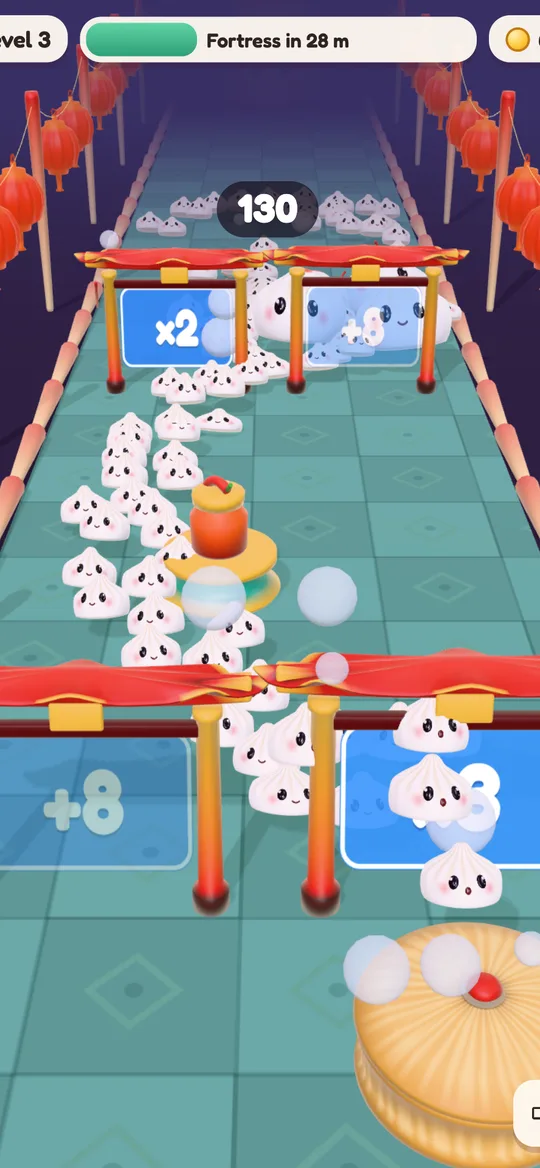
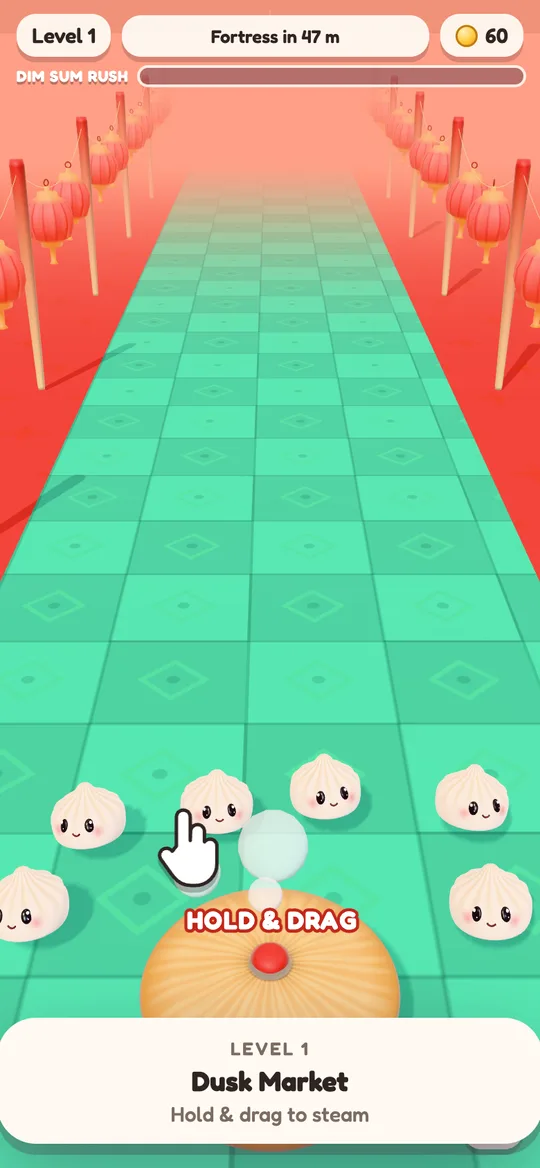
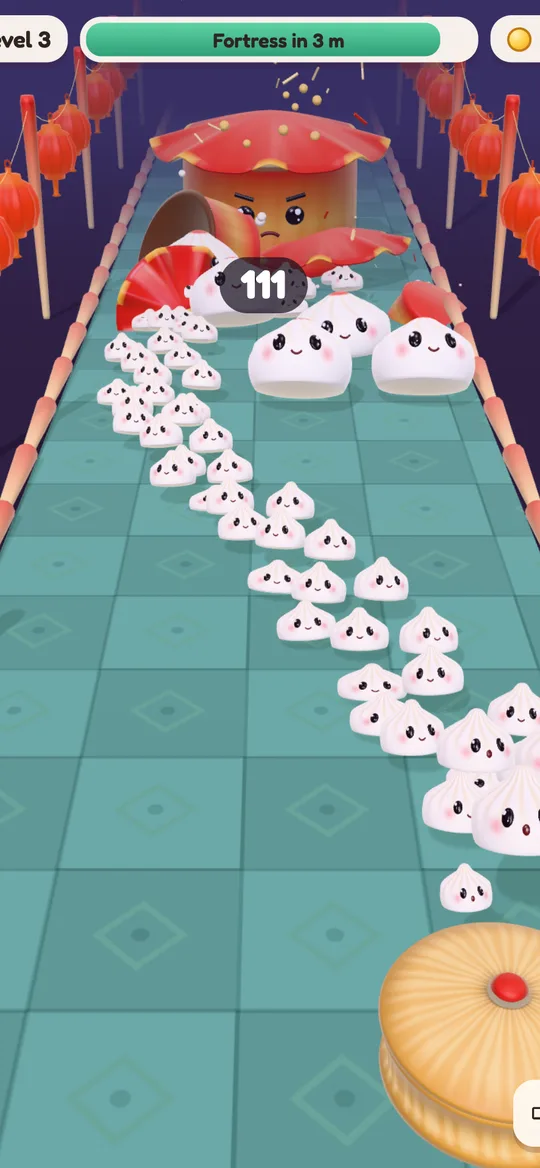
- In a crowd runner, every level is a short, fixed stretch with a goal at the end. In Dumpling Dash the top bar even counts down the distance, for example "Fortress in 47 m", and at the end of the street a chopstick fortress waits to be knocked down.
That single difference shapes everything else. An endless run is a test of how long you can last. A crowd runner level is a puzzle you solve in about a minute, then you move on to the next one.
What you control: one hero or a whole group
In a typical endless runner you guide one character. You swipe to change lanes, jump over barriers or slide under them. One clean mistake, and the run is over.
In a crowd runner you guide a group, and its size is your power. A wrong move costs you some of the group, not the whole game. That makes mistakes feel softer: you lose ten dumplings, not your life.
The controls follow from that. Many endless runners use several gestures, one for each move. Crowd runners usually need just one: drag left and right. In Dumpling Dash you hold anywhere to steam dumplings out of a bamboo steamer and drag to steer them, and that is the whole control scheme. If you are new to the idea of steering a group, our plain guide to what a crowd runner game is covers the genre piece by piece.
How you win and how you lose
This is where the two genres split furthest.
Endless runner:
- Winning means beating your own best score, or someone else's.
- You lose when you crash, fall or get caught.
- The game gets harder by going faster and packing obstacles closer together.
Crowd runner:
- Winning means clearing the level, usually by beating an enemy at the end.
- You lose when the crowd is too small or too slow to finish the job.
- The game gets harder level by level, with tougher enemies and new obstacles.
In Dumpling Dash, chopstick soldiers march down the street toward your steamer while your dumplings attack the fortress. If the soldiers reach the steamer first, the level ends and you can retry. Difficulty also comes in steps: every 5th level is HARD with more coins, and every 10th has a boss such as the Giant Fork or the Wok Golem, followed by an easier level or a dumpling rain bonus level.
How each one makes you think
Both genres are fast, but they ask your brain for different things.
An endless runner is mostly about reflexes and rhythm. You read the next obstacle, react, then read the next. As the speed climbs, there is less and less time to think, and a long run becomes a test of focus and timing.
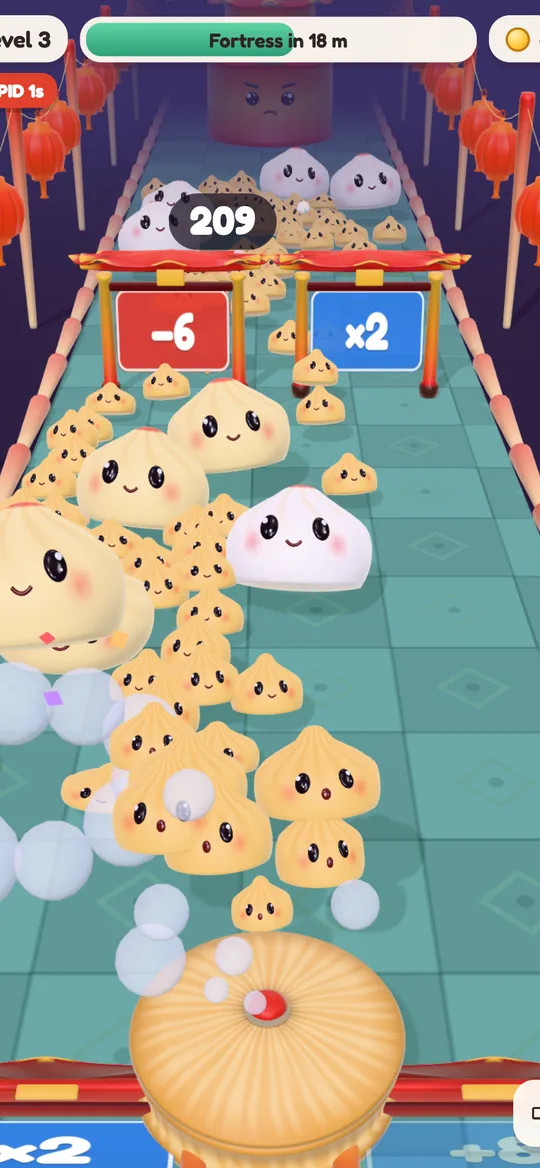
A crowd runner is about small decisions. Gates come in pairs, and each one is a quick sum. Should you take ×2 or +15? With a small crowd, adding wins; with a big one, multiplying wins. Our tips for picking the right gate go through that rule with worked examples.
There is a second skill too: shape. A tight crowd fits through one gate and hits hard, while a wide, scattered crowd can split across a good gate and a bad one. In Dumpling Dash, eight dumplings close together even squish into a MEGA BAO, a big, tough bun that flattens chopsticks. We explain how to keep a group together in our guide on how to keep your crowd tight.
Progress: high scores vs upgrades
Endless runners tend to measure progress with a number: your best score or distance. Many add unlockable characters or power-ups, but the core goal stays the same, which is to go further than last time.
Crowd runners usually move you along a path of numbered levels and let you grow stronger between them. In Dumpling Dash, coins from each level buy upgrades:
- Start crowd, so you begin each level with more dumplings.
- Fire rate, so the steamer works faster.
- Squish power, so each dumpling hits harder.
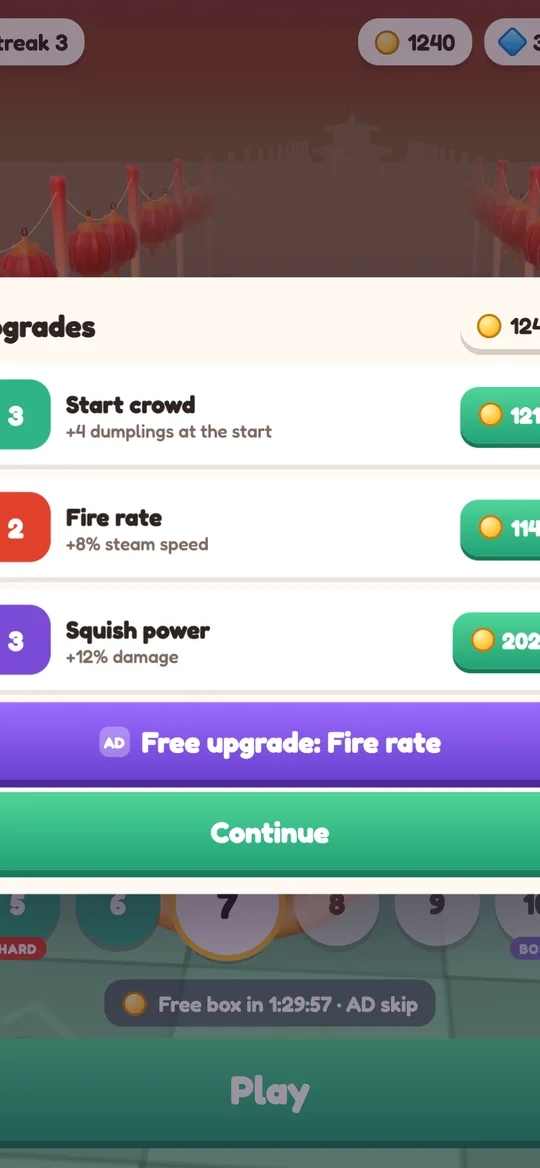
This is why a lost level in a crowd runner rarely feels like a dead end. You can try a different gate, keep the crowd tighter or come back with an upgrade.
Which one suits you?
Neither is better. They scratch different itches. A quick way to decide:
- Ask how long you want to play. If you like one long, tense run, an endless runner fits. If you want a complete game in about a minute, a crowd runner fits.
- Ask what you enjoy more: reflexes or choices. Love dodging at speed? Endless runner. Like quick sums and planning a route? Crowd runner.
- Think about mistakes. If losing everything on one slip feels frustrating, a crowd runner is gentler, since a mistake only shrinks your group.
- Think about stopping points. Crowd runner levels end on their own, which makes it easy to put the phone down after one or two. An endless run stops only when you crash.
- Try one of each. Play a few rounds and notice which one you want to start again straight away.
For younger players, crowd runners have one extra plus: the colour coding is simple. Blue gates help and red gates hurt, so the rules make sense at a glance.
A quick side-by-side recap
- Goal: endless runner, go as far as you can; crowd runner, clear the level.
- You control: one character vs a whole group.
- A mistake costs: the run vs part of the crowd.
- Length: as long as you last vs short, fixed levels (about a minute in Dumpling Dash).
- Main skill: reflexes vs quick sums and steady steering.
- Progress: best score vs a path of levels plus upgrades.
FAQ
Is a crowd runner a type of endless runner?
No. They share the forward-moving track and one-finger play, but a crowd runner has short levels with a finish, while an endless runner keeps going until you crash.
Which is easier for beginners?
Crowd runners are usually gentler at the start, because a mistake only shrinks your group instead of ending the run. The first Dumpling Dash level shows a "Hold & drag" hint right above the steamer.
Do crowd runners get faster like endless runners?
Not in the same way. Crowd runners mostly get harder from level to level, with tougher enemies, new obstacles and special levels, rather than a run that keeps speeding up.
Why do crowd runners have maths gates?
The gates turn every choice into a quick add-or-multiply sum. That small decision is the heart of the genre and what sets it apart from pure reflex games.
Can I play Dumpling Dash offline?
Yes. Dumpling Dash plays offline; an internet connection is only used for ads.